About NEUROS
Forty years
in the making.
Built for this moment.
NEUROS was not assembled from a theory or launched from a business plan. It emerged from decades of direct work with leaders, groups, and organizations — learning, with precision, what actually helps people stay regulated, connected, and effective when the pressure is real.
The science behind this work is well-established. The application to enterprise performance is new. The practitioners who built NEUROS have been developing and refining the underlying methodology for longer than most leadership programs have existed.
Organizations do not fail because of bad strategy.
They fail because the human layer beneath strategy
gives way under pressure.
It started with
a simple question:
what actually
makes change last?
Not what makes people feel better in a room. Not what produces insight. Not what generates enthusiasm at an offsite and fades before the next quarter review. What actually produces durable change in how people function together under real pressure?
Owen Marcus has been working on that question for forty years. The answer — developed through thousands of hours of direct work, refined through failure and iteration, grounded in science — became the foundation of MELD. And MELD became the foundation of NEUROS.
Clinical work and the first teams
Owen Marcus trained as a Rolfer under the direct lineage of Ida Rolf and spent years in one-on-one somatic work — learning, at the level of the body, how stress accumulates, how defense patterns form, and how they can change. Simultaneously, he founded and ran an integrated medical clinic in Scottsdale, Arizona, and began running team-building programs for corporations including IBM. This dual track — clinical precision plus organizational reality — shaped everything that followed.
The commitment to a different model
Owen made a decisive pivot: help people connect through their bodies first. Words follow. The insight sounds simple. The implications are radical. Most development work tries to change behavior by changing thinking. Owen's model addressed the physiological substrate that determines whether thinking translates into behavior under pressure — or doesn't. He began building men's groups around this premise.
Building the method across thousands of hours
What followed was decades of direct group work — not theoretical development, but real rooms full of real people dealing with real pressure. The method was tested, failed, revised, and refined. A national network of groups emerged. The documentary film About Men documented this work. The methodology accumulated specificity: what interventions held, which didn't, why, and under what conditions. This new model continues to evolve in Owen's ongoing work with men and couples.
EVRYMAN and the first organizational scale
Owen co-founded EVRYMAN — men's groups, retreats, and leadership programs that brought somatic group work to a wider organizational audience, including programs with Google X. For the first time, the body-first methodology was being applied systematically inside enterprise environments. Leaders and scientists experienced what Owen's men's groups had shown for two decades: when people regulate together, the quality of everything else changes.
MELD, NEUROS, and the enterprise application
Owen co-founded MELD with Duncan Rich — a more rigorous, science-first framework for the same embodied, relational, and communal development model. MELD refined the methodology for men. NEUROS applies the same principles to co-ed leadership teams, executive cohorts, and enterprise performance. The programs changed. The underlying science did not. The question driving the work — what actually produces durable change under real pressure — remains the same one Owen began asking forty years ago.
The men in groups learned to notice: tight jaw before a hard conversation, breath going shallow in conflict, that moment when your shoulders lift and you're about to shut down. They practiced staying present through it. Then they started using it at work.
Owen Marcus — on the transition from men's groups to organizational work
Organizations called.
Not for team-building.
For this.
The transition from men's development to organizational work was not a strategic pivot. It was an observation. Leaders who went through somatic group work started applying it in their organizations. Meetings changed. Negotiations shifted. Cross-functional friction decreased. Word spread.
Organizations began calling — not for standard leadership training, but specifically for the body-based approach that let people actually feel safety instead of just declaring it. The same nervous-system work that transformed how men showed up in relationships turned out to be exactly what leadership teams needed to stay coherent under organizational pressure.
You cannot policy your way into genuine safety. You cannot workshop your way into regulation. Both require working at the level where the pattern actually lives — in the body, in the space between people, and in the norms the team creates together. That is what NEUROS was built to deliver.
The same physiological principles that helped men stay present in difficult personal conversations turned out to govern how leaders stay present in difficult organizational ones. The stakes differ. The biology does not.
NEUROS is co-ed, B2B, and explicitly performance-oriented. The methodology was adapted for mixed-gender leadership teams, enterprise time constraints, and organizational accountability structures — without compromising the physiological and relational depth that makes it work.
The mechanism is identical: reduce chronic activation, restore access to executive function and relational capacity, and build group coherence through repeated practice — not through instruction, declared values, or single-event interventions. The body remains the entry point.
NEUROS is not men's work marketed to corporations. It is a purpose-built organizational development system — grounded in the same science, refined for a different context, applied by practitioners who have been doing this work long enough to know the difference.
The practitioners behind the work
NEUROS is led by people who have been doing this work — not theorizing about it — for decades. The depth of experience behind each engagement is not incidental to what NEUROS delivers. It is the product.

The practitioner who built the method from the ground up
Owen Marcus spent his first decade in somatic practice — training as a Rolfer, studying the body's stress response at a clinical level, running an integrated medical clinic in Scottsdale. He learned what the body holds and how it can change. He then spent thirty more years figuring out how that change happens in groups. While at the clinic, he led a team that treated Olympic and professional athletes and conducted research on performance enhancement — an early signal that the physiological work had direct applications beyond the therapy room.
Owen trained with Ron Kurtz (Hakomi), received post-graduate training from Peter Levine (Somatic Experiencing), and has worked extensively with Stephen Porges's Polyvagal Theory — the scientific backbone of the safety-first methodology NEUROS delivers. That lineage is not academic. It runs directly into how Owen facilitates: what he listens for, where he intervenes, and why rooms change when he is in them. He is the author of Grow Up: A Man's Guide to Masculine Emotional Intelligence.
Owen does not lead organizations through frameworks. He leads them through direct experience — the kind built across forty years of being in rooms where real change was the only acceptable outcome.
Years of somatic and relational group work
Hours of direct facilitation with leaders, men, and groups
Organizations built on this methodology: EVRYMAN, MELD, NEUROS
Certified Advanced Rolfer — trained in the direct lineage of Ida Rolf
Founder and operator, integrated medical clinic — treated Olympic and professional athletes
Co-founder, EVRYMAN — men's development at organizational scale
Co-founder, MELD — embodied, relational, communal development model
Author, Grow Up: A Man's Guide to Masculine Emotional Intelligence
Featured in documentary film About Men, national magazines, national TV shows and news, and 50+ podcasts
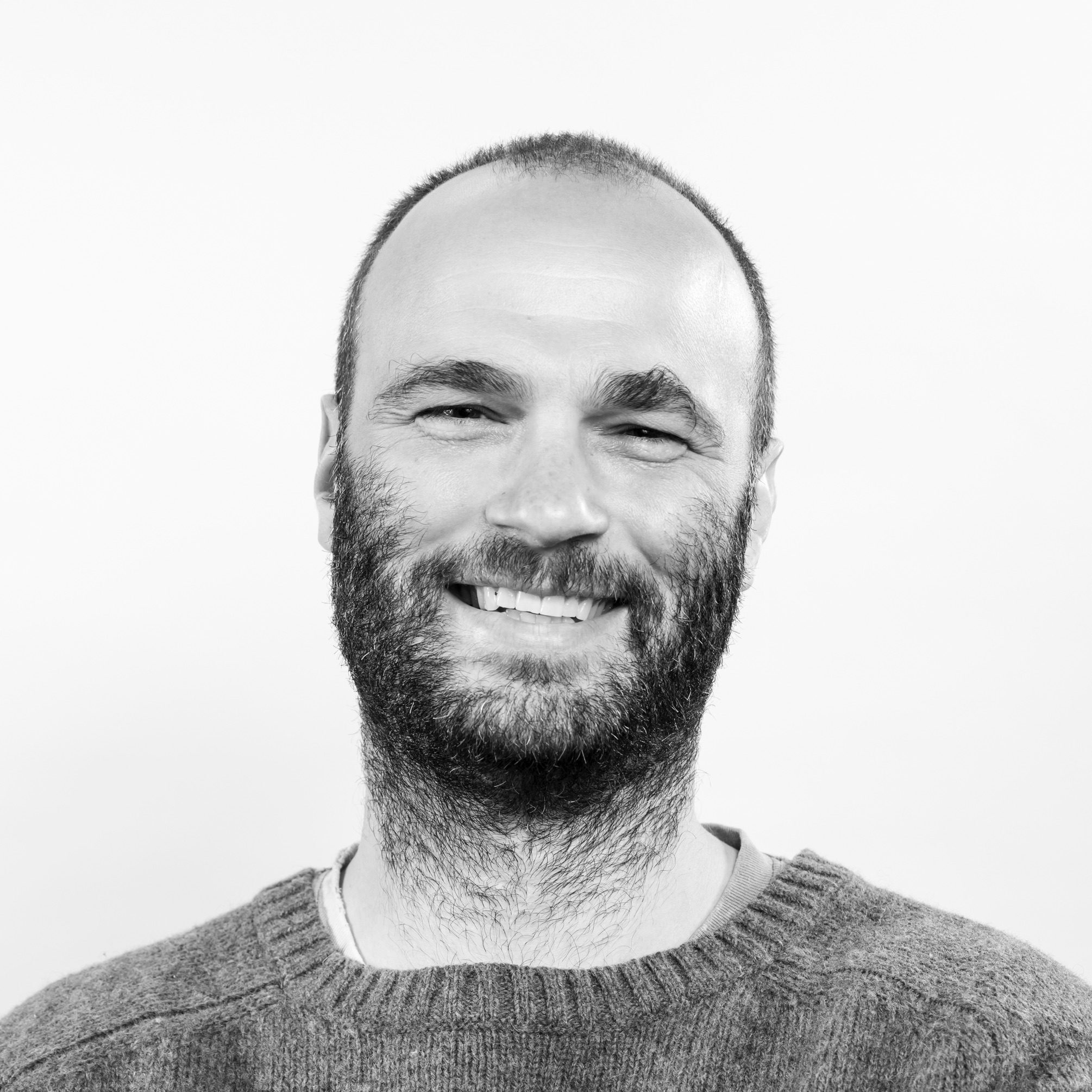
The operator who brings precision to scale
Duncan Rich brings a rare combination to NEUROS: deep somatic and relational fluency alongside the operational precision required to build programs that work reliably at scale. His background spans creating meaningful experiences — from intimate retreat settings to large-scale events — with the through-line of understanding how environments shape what becomes possible for the people inside them.
Duncan is a practicing men's somatic coach and has been central to MELD's development from the beginning — running retreats, building the operational infrastructure, and working directly with men and groups on the same physiological and relational principles that underpin every NEUROS engagement.
At NEUROS, Duncan leads operations and growth — ensuring that what is conceptually sound is also practically deliverable, that what works in a room with twenty people also works in a distributed leadership cohort, and that the quality of experience organizations receive matches the depth of the methodology behind it. His expertise in experience design means NEUROS engagements are built with the same precision as the science they rest on.
Duncan's role is what makes NEUROS viable as an enterprise solution — not just a brilliant practitioner working with individual leaders, but a system that can hold complexity, deliver consistency, and operate at organizational scale without losing what makes it work.
Co-founder, MELD — men's somatic development at organizational scale
Men's somatic coach — practicing facilitator across groups and retreats
Head of Operations & Growth — MELD and NEUROS
Experience design across intimate retreats and large-scale events
The shoulders
this work
stands on.
NEUROS is not a proprietary philosophy. It is the organizational application of a scientific framework developed by researchers whose work has been validated across thousands of peer-reviewed studies and decades of clinical practice.
The practitioners behind NEUROS did not read these frameworks in books and build programs around them. Their work was shaped by direct immersion in traditions rooted in this science — over decades of applied practice with real people under real pressure.
Learn more about the research foundation on our Solutions & Outcomes page.
Stephen Porges
Polyvagal Theory · Safety & Social EngagementSafety is physiological before it is cultural. The vagus nerve governs whether a group is in connection mode or defense mode. NEUROS trains leaders to generate the conditions that activate social engagement — and to recognize when those conditions have failed, before the meeting is over.
Peter Levine
Somatic Experiencing · Stress & ResilienceUnresolved defensive activation — chronic bracing, shallow breath, narrowed attention — is trainable. Leaders who learn to complete activation cycles regain the flexibility under stress that chronic load removes. NEUROS draws directly on Somatic Experiencing principles in its regulation training.
Ron Kurtz
Hakomi Method · Mindful Somatic PsychologyKurtz's insight — that people's deepest organizing beliefs are held in the body and accessed through mindful, present-moment experience — informs how NEUROS facilitators work with groups. Not through interpretation or analysis, but through direct contact with what is actually present in the room.
Amy Edmondson
Psychological Safety · Harvard Business SchoolEdmondson's research established psychological safety as the strongest predictor of team effectiveness. NEUROS addresses her finding at its root: safety is physiological before it is interpersonal. Policy doesn't create it. Training the body and the relational system does.
Not what we say.
How we actually operate.
These are the commitments that determine how NEUROS engages — with organizations, with leaders, and with the work itself.
Diagnosis before prescription
We assess before we recommendEvery engagement begins with understanding what's actually generating the problem. We don't sell programs into organizations. We run a diagnostic conversation first. If what we do isn't the right fit, we say so clearly — and often suggest what might be. This is not a sales tactic. It is how we work.
Capacity over insight
We build, not just explainInsight is not sufficient. Understanding why you react the way you do does not, by itself, give you the capacity to act differently when you're activated and the stakes are real. NEUROS builds capacity through practice. Not through frameworks, awareness exercises, or one-time events.
Honest about limits
We name what we can't doNEUROS improves the human infrastructure. It does not substitute for strategic decisions that haven't been made, governance structures that need redesigning, or fundamental misalignments in the business. We name those clearly — and we don't pretend the work is a substitute for executive decisions that belong to the client.
The constraint has
shifted. The work
hasn't caught up yet.
For decades, the dominant organizational development question was: how do we help people perform better? The answer was usually some combination of skill training, leadership frameworks, coaching, and culture programming.
That question has not become less important. But it has been overtaken by a more urgent one. As AI accelerates information access and compresses strategy cycles, the constraint on organizational performance is no longer knowledge or skill. It is whether leaders and teams can stay coherent, clear, and connected under the speed and complexity of real operating conditions.
The methods most organizations use to develop leaders were designed for a different constraint. NEUROS was built for this one.
AI is accelerating execution faster than human systems can absorb. The leaders who will define organizational performance in the next decade are not the ones with the best access to information. They're the ones who can stay regulated and relational when the pace is real.
Burnout is no longer a wellness metric — it is a performance metric. When leaders operate under chronic load, decision quality degrades, conflict escalates, and talent exits. The cost shows up in execution long before it shows up in an exit interview.
The standard interventions have a ceiling. Organizations have been running leadership training, executive coaching, and culture programs for decades. The patterns that drain performance keep recurring. That is a signal that something at a deeper layer is not being addressed.
The science has been there for thirty years. Polyvagal theory, somatic psychology, social neuroscience, and organizational behavior research have converged on a coherent picture of how human performance works under pressure. Most organizations have not yet applied it. NEUROS exists to close that gap.
Where to Begin
If this is the right
moment for your
organization,
let's find out.
Every engagement begins with a thirty-minute diagnostic conversation. Not a sales call. A direct assessment of what's actually happening in your organization and whether NEUROS is the right fit for it.
We work with a limited number of organizations at a time. The conversation determines fit — for both parties.
Request a Diagnostic Conversation →